Blog 5: My Vision of Leadership

Screen Shot 2016-03-30 at 7.01.10 pm.png

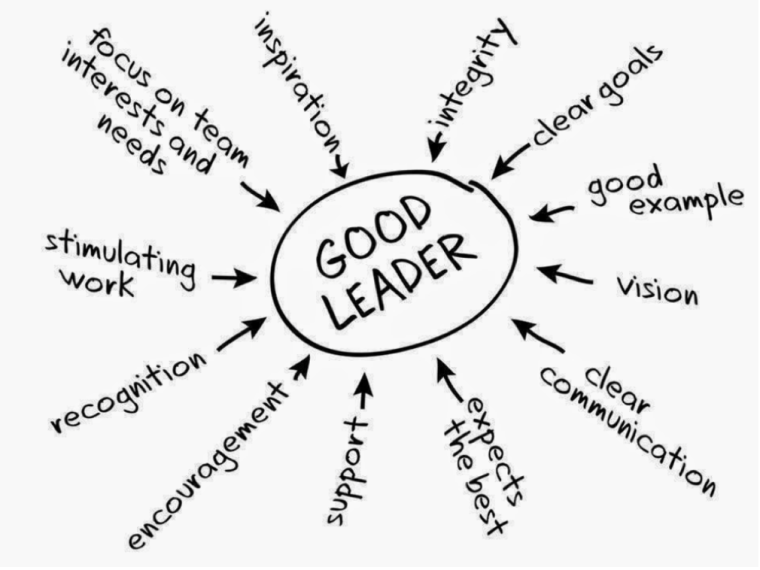
In this blog, I will explore leaders who inspired me, analyse the feedback I have received from my colleagues regarding my own leadership style and my vision of leadership. Finally, I will explore the leadership skills and styles to develop and achieve through my MBA.

 Leaders who inspired me

In my previous blogs (Ooi 2016: Blog 1-Blog 4), I have mentioned several leaders within the manufacturing industry and they all inspired me a lot. Their ethics, leadership skill, management skill, and strategies have brought me a lot of inspiration. There is another one leader who I have not mention before, the chairman and CEO of Starbucks, Howard Schultz.  He is recognised as one of the “world’s greatest leader” by leading Starbucks to achieve “World’s Most Ethical Company” (Starbucks Newsroom 2014). According to Gallo (2013) when he was interviewing Schultz, Schultz told him that he likes coffee but he is “passionate about building a company that treats people with dignity and respect” and “…coffee is what Starbucks makes as a product, but that’s not the business we’re in.” He has created a set of value, a guiding principle and a good diversity culture in Starbucks, which have benefited not only to himself but also to his employees and stakeholders (Schultz 2011). As a leader, he always set his purpose clear and the purpose that he set always gives value to everyone.

Besides that, the spirit of keep challenging and risk taking of Sir Richard Branson (Branson 2015) also inspired me. These leaders inspired me in the way of having the ability to persuade people and make people to believe in them and follow them into the unknown and unpredictable decision making. In facts, there are too much of inspiration I got from each of every leader I have mentioned before (Ooi 2016: Blog 1–Blog 4) that I couldn’t list it out one by one.

Feedback from my colleagues

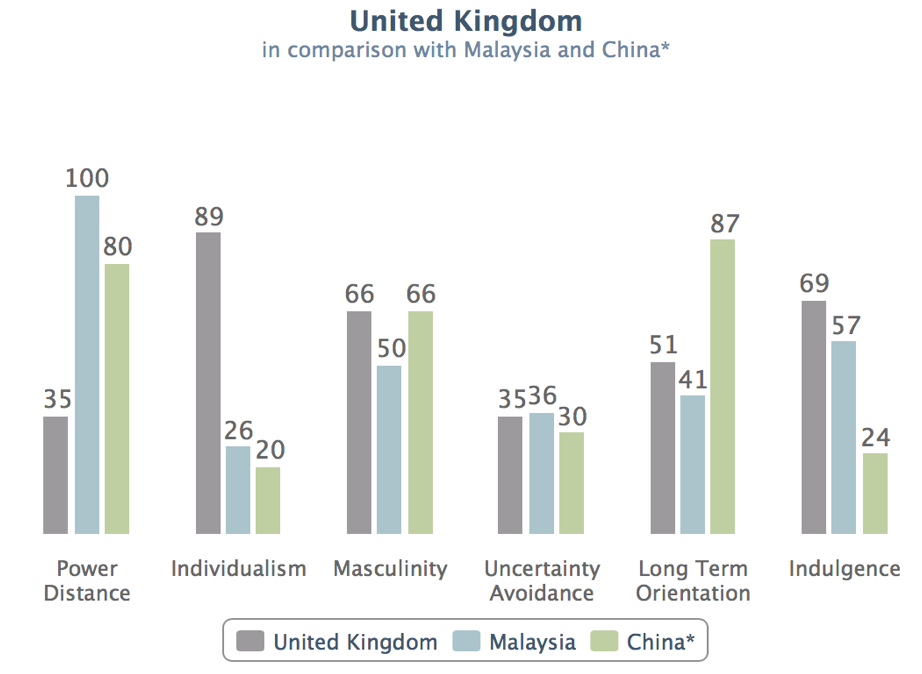
 Over the course of taking this module and the group activities in class, my colleagues have given me feedback regarding my leadership skills. Their feedbacks are quite similar such as manage things well, patient in explaining to colleagues and give clear instruction (which I think I mostly use autocratic leadership style). However, when I reflect on the leadership style I used, the reason I have been using the autocratic leadership style is due to the culture of my colleagues. Most of my colleagues are Chinese and their level of individualism are low. Hofstede (2016) research has also stated that Chinese individualism is very low compared to other country. Nevertheless, this has also shown that my leadership skills are poor because I am not able to encourage, motivate and persuade them to be initiative and give more of their own ideas and opinion.
Screen Shot 2016-03-30 at 7.02.13 pm.png

My vision of leadership

After exploring different types of leaders with different leadership styles in the manufacturing industry, I envision to be an effective, ethical, satisfying and purposive leader (Gandz 2007). An effective leader should have more than one leadership style. In my opinion, everyone has different personality and culture therefore the way he wants to be led or treated will also be different (Ooi 2016: Blog 2). Furthermore, according to Bouchikhi, H. and Kimberly, J. R. (2000), different generation prefer different kind of work situation due to different theory of personhood, information and knowledge, different purpose of working, perception and culture. (see picture below)
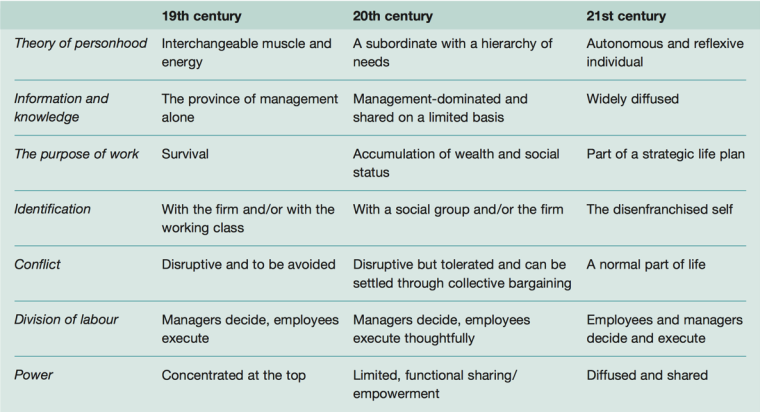
Screen Shot 2016-03-30 at 7.03.11 pm.pngSource: Bouchikhi, H. and Kimberly, J. R. (2000)

With the aid of feedbacks from my colleagues, and after exploring the leaders who inspired me, I also envision to be a transformational leader. According to Burns (1978) who first introduced the concept, transformational leadership “is a process in which leaders and followers help each other to advance to a higher level of morale and motivation”. Leader who practices this leadership style will have the ability to influence, motivate and persuade people. Later research by Bass (1985) further adds that transformational leader will be able to

  • Increase people’s awareness of task importance and value
  • Get people to prioritize team or oranisational goals
  • Get followers who trust, admire, loyal and respect him

In short, transformational leaders motivates followers through his or her idealized influence, intellectual stimulation and individual consideration. They offer their followers working for self gain, provide followers with an inspiring mission and vision and give them an identity. This results in encouraging followers to come up with new and unique idea to challenge the status quo and change the environment to support being successful. With this leadership skill, I could be abled to persuade and motivate my colleagues in our group activities and group works. These are all my vision of leadership.

The skills I aim to develop

After exploring leaders who inspired me, my vision of leadership and analyzing the feedbacks from my colleagues, the skill I aim to develop is the motivation, influencing, communication and decision making skills. I need to understand my current ability and recognize my pattern of learning to keep improving and challenging myself to do the best.  With the aid and the opportunities given by the university, such as the courses of Academic and Professional Skill; Employability and Consulting Skills; work activities and group assignments; I believe I could develop the skills I need throughout my MBA.

List of Reference

Bass, B.M. (1985), Model of transformational leadership, In T.F. Mech & G.B. McCabe (Eds.), Leadership and academic librarians, (pp. 66–82),Westport, CT: Greenwood, 1998.

Bouchikhi, H. and Kimberly, J. R. (2000), ‘The Customized Workplace’, in Chowdhury, S. (ed.) Management 21C, Financial Times Prentice Hall, p. 215. Reproduced with permission from Pearson Education Ltd.

Burns, J.M. (1978), Leadership, N.Y, Harper and Row

Gallo, C. (2013), Forbes, What Starbucks CEO Howard Schultz Taught Me About Communication and Success [online] Available from < http://www.forbes.com/sites/carminegallo/2013/12/19/what-starbucks-ceo-howard-schultz-taught-me-about-communication-and-success/#3e795eec7d2d > [20 March 2016]

Gandz, J. (2007), Ivey Business Journal, Great Leadership is Good Leadership [online] Available from <  http://iveybusinessjournal.com/publication/great-leadership-is-good-leadership/ > [20 March 2016]

Hofstede, G. (2016), The Hofstede Centre [online] Available from <http://geert-hofstede.com/united-kingdom.html > [20 March 2016]

Mullins, L. (2010), Management & Organisational behaviour, 9th ed, Essex, England: Pearson.

Richard, B. (2015), Virgin, 65 Challenges for my 65th year [online] Available from < https://www.virgin.com/richard-branson/65-challenges-for-my-65th-year > [20 March 2016]

Shultz, H. (2011), Closing 7,100 Stores for An Afternoon Was The First Step To Saving Starbucks [online] Available from < http://www.businessinsider.com/starbucks-ceo-howard-schultz-onward-book-excerpt-2011-3?IR=T > [20 March 2016]

Starbucks Newsroom (2014), Starbucks and Howard Schultz Recognized for Leadership [online] Available from < https://news.starbucks.com/news/starbucks-and-howard-schultz-recognized-for-leadership > [20 March 2016]

Blog 4: Leadership & Change

Screen Shot 2016-03-16 at 7.07.27 pm

The aim of this blog is to discuss and analyse the above statement, explore the type of resistance that comes with change and if change could be managed in the manufacture industry.

 Why changes happened in manufacture industry?

According to the previous blog (Ooi 2016: Blog 2) mentioned how globalisation, society changed and diversity happened in the manufacturing industry, change didn’t come in purpose but a natural way. Globalisation has changed the manufacturing’s role (Manyika, Sinclair and obbs et al. 2012). It became a diverse sector and has entered a dynamic new phase. When the manufacturing business become complex, in order to survive, keep up with the constantly changing environment (Matai 2011) and not falling behind, a lot of the manufacturing companies have to change their management, systems and organisational culture of the company.

In above video, the chairman and CEO of General electric, Jeff Immelt stressed that pushing for change is necessary even though investors and employees may not like it. “The world your managers are dealing with is just more volatile than it used to be. You’ve got to find a way to buffer your investors and your employees from these wild swings.” said Immelt (Chandler 2010).

Resistance

Why people resist to change? According to Rick (2011), people resist to change because:

  • Misunderstanding about the need of change due to the reason of change given is unclear.
  • They fear of the feel of uncertainty
  • Lack of competence
  • Connected to the old way
  • Don’t believe the company and themselves can manage the change
  • Belief that the change initiative is temporary fad
  • They are not being Consulted
  • Poor communication with management
  • Change of routine forces them to come out of their comfort zone
  • Benefits and rewards for making the change are not adequate for the trouble involved
  • Motivation is low
  • They have the perception of change putting them into disadvantage

Kubler- Ross (Cited from Warwick 2016) however explain people go through 5 stages of ‘grief’ which are denial, anger, bargaining, depression and acceptance, when faced with a loss or change.

Screen Shot 2016-03-26 at 6.01.02 am.png

Sources: Warwick (2016) ‘Grief’ model

Screen Shot 2016-03-26 at 4.06.15 pm.png

Sources: Mintzberg, H. and J. A. Waters (1985)  Deliberate and Emergent Strategy

Minzberg’s (1985) argues that “strategy emerges over time but often, the intention collides with a changing reality.” Deliberate strategy is a realised and intended strategy, whereas emergent strategy is a realised strategy. The intended strategy has to be precise and clear with a sense of purposeful direction when implement into the organisation. Emergent strategy however is a strategy that create through working experience and practices. In the process of deliberating the intended strategy, environment change and the strategy of the competitors will force or drive an organisation to come out with an unrealised strategy. After that, the emergent of unrealised strategy will then become a realised strategy.

How change can be managed

According to Sull (1999), “the fresh thinking that led to a company’s initial success is often replaced by a rigid devotion to the status quo and when the environment change, their once winning formula become their factors to failure”. For example, Nokia, a pioneer mobile phone manufactured company that once dominated the phone mobile market failed to respond effectively to the changing environment around them; especially when mobile phone industry is the most competitive and fast evolving industry (Birkinshaw 2013). To be adaptive to the environment and achieve competitiveness, organisation has to keep analysing the organisational issues and industry environment to identify if there is need to change (Todnem 2005).

Kantr, Kotter and Luecke have created different steps and stages to share the visions and reform new culture and policies to achieve organisational change.

Screen Shot 2016-03-25 at 6.27.03 pm.pngSources: Barnard and Stoll (2010)

By looking at the above model comparison, all of them actually have quite similar thoughts. Although a lot of leaders have studied about these theories and models, it is still quite difficult to achieve each step.

Furthermore, an organisational culture also involved individual culture, personality and nationality (Ooi 2016: blog 2). People from different background, culture, personality and nationality will have different level of acceptance and resistance (Smith, Friesen and Yaprak 2013). Therefore, in order to have better communication and better management towards organisational change, it is better to put consideration on these contexts. However, patient and times have to be used to alter people’s behavior, thought, feel and culture of individual as well as an organisation (Katzenbch, Steffn and Kronley 2012).

Conclusion

I have to disagree to the above statement that “… it is up to personality of individual whether to make changes” and “…there is little management could do about resistance to change”. Whether like it or not, it is not up to an individual to decide on staying statue quo or make changes but it is depending on the competitiveness of the market and competitor’s strategy to decide if you have to make changes in your organisation. Resistant can be managed and leader has to manage the resistant carefully in order to achieve the success of changing and survive in this highly competitive industry

List of References

Barnard, M. and Stoll, N. (2010), University of Bristol, Centre for Understanding Behaviour Change [online] < Available from http://www.bristol.ac.uk/media-library/sites/cubec/migrated/documents/pr1.pdf > [17 March 2016]

Birkinshaw, J. (2013), Fortune, Why corporate giants fail to change [online] Available from <  http://fortune.com/2013/05/08/why-corporate-giants-fail-to-change/ > [17 March 2016]

Chandler, M. (2010), Stanford Business, GE’s Jeff Immelt: Driving Change Can Be Unpopular [online] Available from < https://www.gsb.stanford.edu/insights/ges-jeff- immelt-driving-change-can-be-unpopular > [17 March 2016]

Hudson (2016), organisational change management [online] < http://au.Hudson.Com/talent-management/organisational-change-management > [ 17 march 2016]

Johnson, G. (1992) ‘Managing Strategic Change— Strategy, culture and action’, Long Range Planning ,25, 1, 28 – 36.

Katzenbach, J. R., Steffan, I. and Kronley, C. (2012), Harvard Business Review, Cultural Change that Sticks [online] Available from < https://hbr.org/2012/07/cultural-change-that-sticks > [17 March 2016]

Manyika, J., Sinclair, J. and Dobbs, R. et al. (2012), McKinsey & Company, Manufacturing the future: The next era of global growth and innovation [online] Available from < http://www.mckinsey.com/business-functions/operations/our-insights/the-future-of-manufacturing > [17 March 2016]

Matai, D. (2011), Business Insider, What Is the Key To Survival In A Constantly Changing Environment? [online] Available from < http://www.businessinsider.com/what-is-the-key-to-survival-in-a-constantly-changing-environment-2011-3?IR=T > [17 March 2016]

Mintzberg, H. and J. A. Waters (1985) Of Strategies Deliberate and Emergent Strategic Management Journal (6): 257-272.

Mullins, L., (2013), Management and Organisational Behaviour, 10th Edn. Harlow: Pearson

Ooi, S.N. (2016), Blog 2 The Challenge of Managing Diverse Team [online] Available from < https://culcoois5.wordpress.com > [11 March 2016]

Rick, T (2011), Meliorate, Top 12 Reasons Why People Resist Change, [online] Available from < http://www.torbenrick.eu/blog/change-management/12-reasons-why-people-resist-change/ > [17 March 2016]

Smith, R.K., Friesen, D. P. and Yaprak, A. (2013), Does Culture Affect how People Receive and Resist Persuasive Messages? Research Proposals about Resistance to Persuasion in Cultural Groups, Global Advances in Business Communication: Vol. 2: Iss. 1, Article 5.

Sull, D. (1999), Harvard Business Review, Why Good Companies Go Bad [online] Available from < https://hbr.org/1999/07/why-good-companies-go-bad > [17 March 2016]

Todnem, R. (2005), Organisational Change Management: A Critical Review, Journal of Change Management, Vol 5 (4): 369-380

Warwick (2016), self- directed learning: managing yourself and your working relationship [online] < https://www2.Warwick.Ac.Uk/services/ldc/courses/sdl/sdl_managing_change.Pdf > [17 march 2016]


Blog 3: Most Effective Leadership Style

Screen Shot 2016-03-15 at 9.06.20 pm

The purpose of this blog is to discuss and analyse the above statement with the key features of a range of leadership styles and their complexities in the manufacturing industry. As my previous blog (Ooi 2016: Blog 2) mentioned that the changing of the society and the increased of the diversification in an organisation makes manager or leader hard to manage the company . To better lead or manage the organisation, a lot of the peoples keep debating..

Leadership Vs. Management

Screen Shot 2016-03-15 at 9.34.25 pm

According to Kottler, J (Cited from Ratcliffe, R 2013), the professor of leadership at Harvard University, “Management is a set of processes that keep an organisation functioning. They make it work today – they make it hit this quarter’s numbers. The processes are about planning, budgeting, staffing, clarifying jobs, measuring performance, and problem-solving when results did not go to plan. Leadership is however very different, it is about aligning people to the vision, that means buy-in and communication, motivation and inspiration”. A lot of  debates and researches have been going on and difference opinions and definitions have been given by researchers and leaders regarding this topic, however, Yukl (2013:39) suggests that leadership is an important role requirement for managers and the leadership skill is very essential to not only the manager but the company to manage its employees. That is why the managerial job exist.

Leadership styles found in manufacturing industry

Goleman, D (2000) found that, “manager’s leadership style was responsible for 30% of the company’s bottom-line profitability”. Different leadership styles may affect the effectiveness and performance of the organisation. Nanjundeswaraswamy T. S. and Swamy D. R. (2014) researched on leadership styles used in manufacturing industry shown the dimension of the leadership styles included the autocratic and democratic leadership styles. Mollo, Stanz and Groenewald (2005) however, suggested that there are three approaches (Traits, behavioural and Situational or contingency) to the leadership style that could affect the effectiveness of the leadership in the manufacturing industry.

Screen Shot 2016-03-12 at 10.42.23 pm

McGregor’s leadership style has explained the Theory X and Theory Y model (1960), Leader who possessed Theory X trait normally has a perception of employees dislike work, find it boring and always avoid to do jobs. Therefore, employees have to be forced, directed by the leader in order to get into compliance.  Leader who possessed Theory Y however, is a lot open minded than the leader who possessed Theory X leadership style. He always find their job interesting and enjoyable; and always gives his employees freedom and opportunities to show their talents and skills by direct themselves towards the vision and mission shared by the leader. Recognition and reward are giving to the employees who performed well (Mullins 2013:375).

Screen Shot 2016-03-12 at 11.42.35 pm.png

Sources: Lewin, K. (1939) Leadership style

Lewin, K. (1939) on the other way, argued that there are three major leadership style which are the autocratic, laissez- faire and democratic leadership styles. The autocratic leadership style is like the Theory X model explained above. Laissez- faire leaders will giving the employees to voice out their opinion however, the final decision will still make by the leaders. The Democratic leaders are like the Theory Y trait mentioned above.

Ricardo Semler, CEO of Semco, has changed his company’s culture completely different with his father by using democratic leadership style (Maddux, W., Swaab, R. and Williams, E. 2014). Under his leadership, Semco has now became the most profitable enterprises in Brazil (Mogg, 2015). Comparing the former and current CEO of the Apple Inc., Steve jobs adopted autocratic leadership style (Richard, B. 2011) whereas Tim Cook is much more approachable with using the Democratic leadership style as a general (Gumble, A. 2014). Both of them using different leadership styles but they have managed incredibly well.

Screen Shot 2016-03-13 at 12.44.36 am

Sources: Relationship Among Leadership Variable (Yukl, G. 2006)

Click to access MSL_202_L09b_Situational_Leadership.pdf

Unlike McGregor and Lewin that explained leadership in traits approach, Yukl (2006) explained that there is a strong relationship between leader behaviours and follower attitudes and behaviour . Although Yukl explained leadership style using the behavioural approach, by looking at the above picture, Yukl actually has quite similar perception and thought as Mollo, Stanz and Groenewald (2005). The behaviour approach of leadership style that Yukl describing are influenced by personal traits and skills and situational factors .

According to Murray, A (2010),”Leadership styles should be adapted to the particular demands of the situation, the particular requirements of the people involved and the particular challenges facing the organisation”. Sir Richard Branson (2011) has quite similar advice in leadership saying that “Leadership doesn’t have a secret formula; all true leaders go about things in their own way.What leadership boils down to is people. Whatever your style, whatever your method, you need to believe in yourself, your ideas and your staff.”

Conclusion

I agree with the above statement that there is no one best way to influence people. In an organisation, the employees are actually the bosses. Company should treat them like how the company treated their customers and let the employees to determine which leadership style is more appropriate for them since employees’ satisfaction as important as consumers’ satisfaction too. Both of them will affect the profitability of the organisation.


References

Branson, R. (2011), The Telegraph, Virgin’s Richard Branson: Apple boss Steve Jobs was the entrepreneur I most admired [online] Available from <http://www.telegraph.co.uk/technology/steve-jobs/8811232/Virgins-Richard-Branson-Apple-boss-Steve-Jobs-was-the-entrepreneur-I-most-admired.html&gt; [11 March 2016]

CMI (2013), Understanding Management Styles Checklist 236, Chartered Management Institute: London

Goleman, D. (2000), Hardward Business Review, Leadership that Gets Results [online] Available from < https://hbr.org/product/leadership-that-gets-results/an/R00204-PDF-ENG > [11 March 2016]

Gumble, A. (2014), The Guardian, Tim Cook: out, proud, Apple’s new leader steps into the limelight [online] Available from <http://www.theguardian.com/theobserver/2014/nov/02/tim-cook-apple-gay-coming-out&gt; [11 March 2016]

Maddux, W., Swaab, R. and Williams, E. (2014), Ricardo Semler: A revolutionary model of leadership, U.S.A: The Case Centre

Mogg, M.R. (2015), startups, Business Leaders: Ricardo Semler [online] Available from < http://startups.co.uk/business-leaders-ricardo-semler/ > [11 March 2016]

Mollo, S.M., Stanz, K. and Groenewald, T. (2005), Leadership Competencies in a manufacturing environment, SA Journal of Human Resource Management:University of Johannesburg, 2005, 3 (1), 34-42 [online] Available from < http://www.sajhrm.co.za/index.php/sajhrm/article/viewFile/56/56 > [11 March 2016]

Mullins, L.J. (2013), Management and Organisational Behaviour, 10th Edition, Pearson Higher Education

Murray, A. (2010), The Wall Street journal essential guide to management, New York: Harper Business

Nanjundeswaraswamy T. S. and Swamy D. R. (2014), Advance in Management, Leadership Styles, Vol 7(2), [ebook] Bangalore, INDIA: JSS Academy of

Ooi, S.N. (2016), Blog 2 The Challenge of Managing Diverse Team [online] Available from < https://culcoois5.wordpress.com > [11 March 2016]

Ratcliffe, R (2013), The Guardian, What’s the difference between leadership and management? [online] Available from <http://www.theguardian.com/careers/difference-between-leadership-management&gt; [11 March 2016]

Technical Education, pp.57-60, Available from <https://www.mnsu.edu/activities/leadership/leadership_styles.pdf&gt; [11 March 2016]

University Alliance (2016), What makes an Effective Leader [online] Available from < http://www.notredameonline.com/resources/leadership-and-management/what-makes-an-effective-leader/#.VuRMPMdR3PB > [11 March 2016]

Yukl, G. (2006), Leadership in Organizations, 6th Edition, Upper Saddle River, NJ: Pearson Prentice Hall.

Yukl, G. (2013), Leadership in Organisations, Harlow: Pearson Education


Blog 2: The Challenge of Managing Diverse Team


Screen Shot 2016-03-08 at 10.58.46 am

This blog is written to discuss and analyse the above statement together with the challenges when managing diverse team in the manufacturing industry.

Why is diversity management so important for a manager or a leader in the manufacturing industry?

“Diversity aims to recognise, respect and value people’s differences to contribute and realise their full potential by promoting an inclusive culture for all employees in an organisation” (University of Edinburgh 2016). According to Forbes (2015), the implementation of diversity could bring a long- term impact for organisation. Mc Kinsey’s research found that racially diversity organisations are outperform in their industry with a 35% financial returns (Tulshyan, R 2015). Employees from diverse background with diverse culture, thinking, talents, language skills and experiences could supply a greater ways of problem solving, customer services, customer demands and allow company to provide service to customers on a global basis.

Diversity helps to promote efficiency, creativity and increase productivity and become a competitive advantage for manufacturing company (Greenberg, J. 2009). According to Gregersen, H (2012), diversity brings creativity, innovation and flexibility and these are keys important to competitiveness manufacture organisation. Branson, R. (2015), the founder of Virgin Group stressed that business suffers where discrimination is present. Therefore, Virgin has embraced diversity as a commitment, an important tone and echoes throughout an organisation (watch above video). Besides that, there are many more manufacture industry embraced the workforce diversity such as Cisco, the manufactures of networking equipment (Cisco 2016) and Apple, the manufacture of technology and electronics devices (Apple 2016).

Challenges of Managing Diverse Team

Tuckman’s (1965) team development model has explained that in the first three stages of “Group Development”, each group member reveals their leadership personality traits. After understand each other’s personality traits, the group can only move forward to the “performing” stage.

Screen Shot 2016-03-26 at 2.37.41 am.png

Sources: http://wheatoncollege.edu/sail/leadership/student-involvement-handbook/strengthening-group/leadership-teambuilding/

Screen Shot 2016-03-07 at 12.40.39 pm

According to Buckingham, M. (2005), One of the challenges faced when managing diverse team is to identify and capitalise each of the team member’s skills and knowledge and at the same time, identify their behaviour, preferences, value, beliefs and uniqueness in order to assign them work or job which is suitable for them. It is not an easy task, in fact, very difficult. Based on Edward T. Hall’s Cultural Iceberg Model shown in picture above, as you can see, only 10% of the iceberg is shown on the waterline surface but 90% of the iceberg is below the waterline which you can’t see and don’t know (Mullins, L.J. 2013). This iceberg represent a people. As u can see in the above picture, what a people shown is just his or her gender, skin colour, age and race. You might still need to guess their age and race. Besides, u can take a guess on their nationality, wealth, religion, culture and social status by their outfits or personal behaviour. Other than that, such as skills, perception, talents, work style and many more which shown below the water line of iceberg is hard to identify.

During study, i have joined a business simulation game where a group of peoples from different countries, races and culture, who also don’t know each other, sit in a group,  and were assigned different team role to run a business. Each of us don’t know each other, therefore, we don’t know each other’s skill, talent and ability. Due to the team role assigned by professor does not suit some of the people, we lost heavily in the first business cycle. After the first business cycle, we had a meeting and everyone started to talk to each other and change our team role according to individual personality, skills and talent. In the second business cycle, we started to make profit. According to Belbin’s research, there are nine key clusters of behaviour (or Team Roles) which are crucial to the success of a team or project. The Belbin test could helps to identify an individual’s behaviour including the strength and weakness for both individual and team use (Belbin 2015). If we know each other and understand each other’s capability, talent, strength and weakness, we could have earn profit started in the first business cycle.

In addition, to improve corporate’s culture, Hofstede has researched on cultural by comparing the power distance, individualism, masculinity, uncertainty avoidance, long term orientation and indulgence for each country such as picture below (Hofstede 2016).

Screen Shot 2016-03-07 at 4.04.00 pm


Hofstede’s research on culture is different from Belbin’s. Belbin’s research is more into personality and attitude of individual and individual in a team but Hofstede’s research is more into an organisation’s human resource management. Both of their research could be used together to get a better result.

As a conclusion, diversity is relation to a company’s performance and culture. It will enhance group performance by broadening group’s knowledge, perception and enable to exchange information and skills. Besides, it could also increase creativity and innovation. Therefore, although manage a diverse organisation is challenging, I am totally agree with the above statement that diversity is very important.
List of References

Apple (2016), Inclusion & Diversity [online] Available from < http://www.apple.com/diversity/ > [6 March 2016]

Belbin (2015), A variety of different types of Report are available [online] Available from <http://www.belbin.com/about/belbin-reports/ > [ 6 March 2016]

Buckingham, M. (2005), What great managers do, IEEE Engineering Management Review, 33(2), pp.3-3.

Cisco (2016), Workforce Diversity- Inclusion Diversity [online] Available from < http://www.cisco.com/c/en/us/about/inclusion-diversity/workforce-diversity.html > [6 March 2016]

Greenberg, J. (2009), Multicultural Advantage, Diversity in the Workplace: Benefits, Challenges and Solutions [online] Availability from < http://www.multiculturaladvantage.com/recruit/diversity/diversity-in-the-workplace-benefits-challenges-solutions.asp > [ 6 March 2016]

Gregerson, H. (2012), Bloomberg Business, It’s time to diversify diversity [online] Available from < http://www.bloomberg.com/news/articles/2012-04-24/its-time-to-diversify-diversity&gt; [6 March 2016]

Hofstede, G. (2016), The Hofstede Centre [online] Available from <http://geert-hofstede.com/united-kingdom.html > [6 March 2016]

Ibarra, H., Hansen, M. T. (2011), Are You a Collaborative Leader? [online] available from <https://hbr.org/2011/07/are-you-a-collaborative-leader&gt; [6 March 2016]

Mullins, L.J. (2013), Management and Organisational Behaviour, 10th Edition, Pearson Higher Education

Richard Branson (2015), Virgin, How to advance diversity at work [online] Available from < https://www.virgin.com/richard-branson/how-to-advance-diversity-at-work > [6 March 2016]

Tuckman, B, W., Jensen, M, A, C. (1977) ‘Stages of Small-Group Development Revisited’. Group Organization Management [online] 2 (4), 419-427. available from <http://gom.sagepub.com/content/2/4/419.full.pdf+html&gt > [6 March 2016]

Tulshyan,R. (2015), Forbes, Racially Diverse Companies Outperform Industry Norms by 35% [online] Available from < http://www.forbes.com/sites/ruchikatulshyan/2015/01/30/racially-diverse-companies-outperform-industry-norms-by-30/#6555f5ab5742 > [ 6 March 2016]

UCSF (n.d.), Chapter 12: Managing Diversity in the Workplace [online] Available from < http://ucsfhr.ucsf.edu/index.php/pubs/hrguidearticle/chapter-12-managing-diversity-in-the-workplace/#681 > [6 March 2016]

University of Edinburgh (2016), What are Equality and Diversity? [online] Available from < http://www.ed.ac.uk/equality-diversity/about/equality-diversity > [6 March 2016]


Blog 1: LEADERSHIP AND ETHICS

Screen Shot 2016-02-14 at 3.10.49 pm

This blog is written to discuss and evaluate the above statement in the manufacturing industry. To evaluate the above statement in term of manufacturing industry, first, what is the “ethical” means in business perspective? Generally,  having business ethic behaviour is knowing what it right or wrong in the workplace and only doing what’s right (McNamara, C. n.d.). However, how can we determine what exactly is right or wrong?

Kant’s Duties Theory, which is the deontological moral theory explained that the rightness or wrongness of a person’s action is depending on whether he fulfilled his duty, not the consequences. Kant said that a person should follow the absolute law and this law has included the basic human law, such as a person should not lie, steal and kill (Shaw W.H. & Barry V. 2010). The utilitarianism, which is the teleological theory, suggests that the greatest good is the greatest happiness. It stressed that we should maximise the social goods, the good for the majority. Compare with Kant’s theory, the Utilitarianism look more into the output and consequences (Shaw W.H. & Barry V. 2010). Kant’s theory has excluded the emotion of the people. If applying Kant’s theory in manufacturing industry, does this mean that every company will just need to follow the minimum requirement of health and environment law by the government and not considering the benefits and welfare of the employees? The utilitarianism on the other hand, encourage company to bring welfare, benefits and value to its stakeholders. If putting this theory into the bank sector, to the benefits of majority which is the consumers, the bank should provide a very low interest rate which do not benefits the bank at all. Both theories have their weakness when apply in business.

Screen Shot 2016-03-05 at 7.54.19 pm

The above picture is the 4- V Model created by Dr. Bill Grace. It explained that a leader with ethical leadership will share and give the value and vision, giving voice to the value and vision. The Virtue is blend of these three elements with a commitment, and make leadership more effective (Centre of Ethical Leadership n.d.).

Blake Mycoskie, the manufacturer and founder of TOMS shoes, has used all of the theories mentioned above at the same time. He has created the One for one business model. For every pair shoe the company sold, TOMS donates a new pair to poor children. He encourages the ethical culture movement to his employees and stakeholders by being chief of TOMS shoe giver (O’Brien, G. 2011). His action and leadership that included the ethical value has inspired and motivated his employees and stakeholders that they are involving in a very importance and worthy mission. He also gives trust and value to the consumers that every dollar spend at TOMS is worthy. He has shared his value and vision, bring benefits and happiness to the majority and fulfilled his duty as a leader.

Why ethical leadership is so important?

Let’s look at today’s movement. The government and public are encouraging and supporting the green environment, to do good things and to help people. More and more organisational companies using the Corporate Social Responsibility (CSR) as their core business model (Bradley, J. 2016). There are more and more people taking ethical culture seriously (Baue, B. 2010). The employees, consumers and stakeholder of the companies all seek for the ethical value such as the fairness, goodwill, right, Justice and trust .   Businesses and leader’s promises and vow of being ethical could not earn people trust anymore (Melville- Ross, T. 2013). According to Brammer, S. (2006), “employee perceptions of their firms’ social responsibility influenced the degree to which they were committed to their organisation”. Thus, to prove and make sure the organisation  acts ethically, a leader with ethical leadership is very important.

Martin Winterkorn, the former CEO of Volkswagen AG allowed Volkswagen to install a software that could pass the emissions tests by decreasing emissions. The diesel cars from Volkswagen that installed the software has been detected will be polluted at amounts well beyond legally allowed limits. It is lucky that the software has been detected when the car was undergoing testing. Although Winterkorn as a former leader has brought a lot of profit to the Volkswagen, his last decision however will bring a serious harm to the environment as well as human races. He did not give value to his stakeholders and in contrary, bring harm to the majority. The action of Winterkorn caused him to lose both his own and organisation’s reputation, profit and value (Hotten, R. 2015).

Conclusion

In short, I agree that ethical leader behavior can bring positive effect for both individual and organization. As the above mentioned how ethical leadership in Mycoskie has brought positive effect for both him and his organization, young entrepreneur should take him as an example and bare in mind that unethical leadership will brought negative effect and end up like Winterkorn.

List of References:

Baue, B. (2010), Business Ethics, Opinion: When CSR become a movement [online] available from < http://business-ethics.com/2010/01/22/1034-corporate-social-responsibility-movement/ > [13 February 2016]

Bradley, J. (2016), Chron, Corporate social responsibility and ethical leadership [online] available from < http://smallbusiness.chron.com/corporate-social-responsibility-ethical-leadership-64123.html > [13 February 2016]

Brammer, S. (2006), The Guardian, Feel- good factories [online] available from < http://www.theguardian.com/money/2006/jan/21/workandcareers.careers > [13 February 2016]

Centre of Ethical Leadership (n.d.), 4 V Model [online] available from < http://www.ethicalleadership.org/concepts-and-philosophies.html > [13 February 2016]

Helmrich, B. (2015), Business News Daily, 30 Ways to Define Leadership [online] available from < http://www.businessnewsdaily.com/3647-leadership-definition.html >[13 February 2016]

Hotten, R. (2015), BBC News Website, Volkswagen: The scandal explained [online] available from < http://www.bbc.co.uk/news/business-34324772 > [13 February 2016]

McNamara, C. (n.d.), Free Management Library, What is business ethics? [online] available from < http://managementhelp.org/businessethics/ > [13 February 2016]

Melville- Ross, T. (2013), The Guardian, Ethical business: companies need to earn our trust [online] available from < http://www.theguardian.com/sustainable-business/ethical-business-trust-values > [13 February 2016]

O’Brien, G. (2011), Business Ethics, The challenge of authentic leadership [online] available from < http://business-ethics.com/2011/10/05/1626-the-challenge-of-authentic-leadership/ > [13 February 2016]

Rubin, R, Dierdorff, E, & Brown, M (2010), Do Ethical Leaders Get Ahead? Exploring Ethical Leadership and Promotability, Business Ethics Quarterly, 20, 2, pp. 215-236, Business Source Complete, [13 February 2016]

Shaw W.H. & Barry V. (2010) Moral Issues in Business, 11th edition. Thomson / Wadsworth